
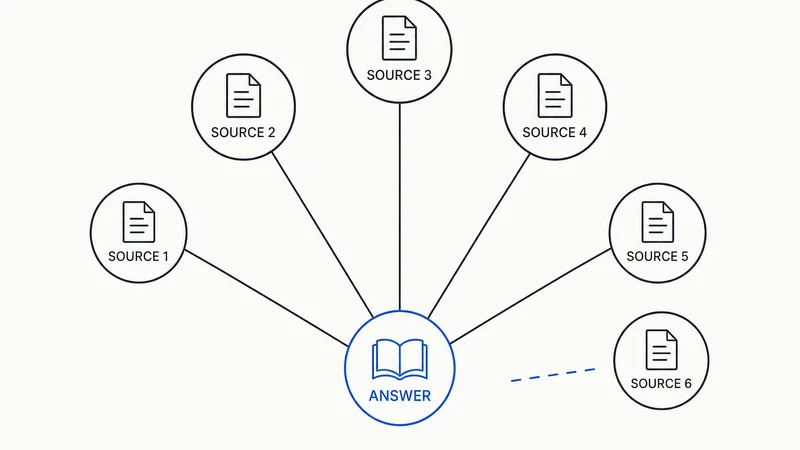
A share-of-voice chart can show that a competitor appears more often. It cannot explain which page caused the difference. Citation gap analysis moves one level deeper by tracing an AI answer back to the sources that shaped it.
The five tools below are ranked for that diagnostic job. The order weights source resolution, competitor-gap clarity, demand context, and the path from evidence to action. It uses the site’s 100-point AI SEO tools Index as the common baseline, but Profound moves ahead of overall leader Temso on citation depth specifically.
Citation analysis matrix
| Rank | Tool | Index score | Best citation capability | Entry price as of July 2026 |
|---|---|---|---|---|
| 1 | Profound | 90/100 | Visual URL maps and Prompt Volumes | $99/mo; full coverage at $399/mo |
| 2 | Temso | 96/100 | Gap-to-execution workflow | $89/mo |
| 3 | Peec AI | 84/100 | Competitor source opportunities | €85/mo |
| 4 | AthenaHQ | 82/100 | Citation-led content queue | $295/mo |
| 5 | Otterly.AI | 80/100 | Prompt-level citations and page audit | $29/mo |
1. Profound: the clearest source trail
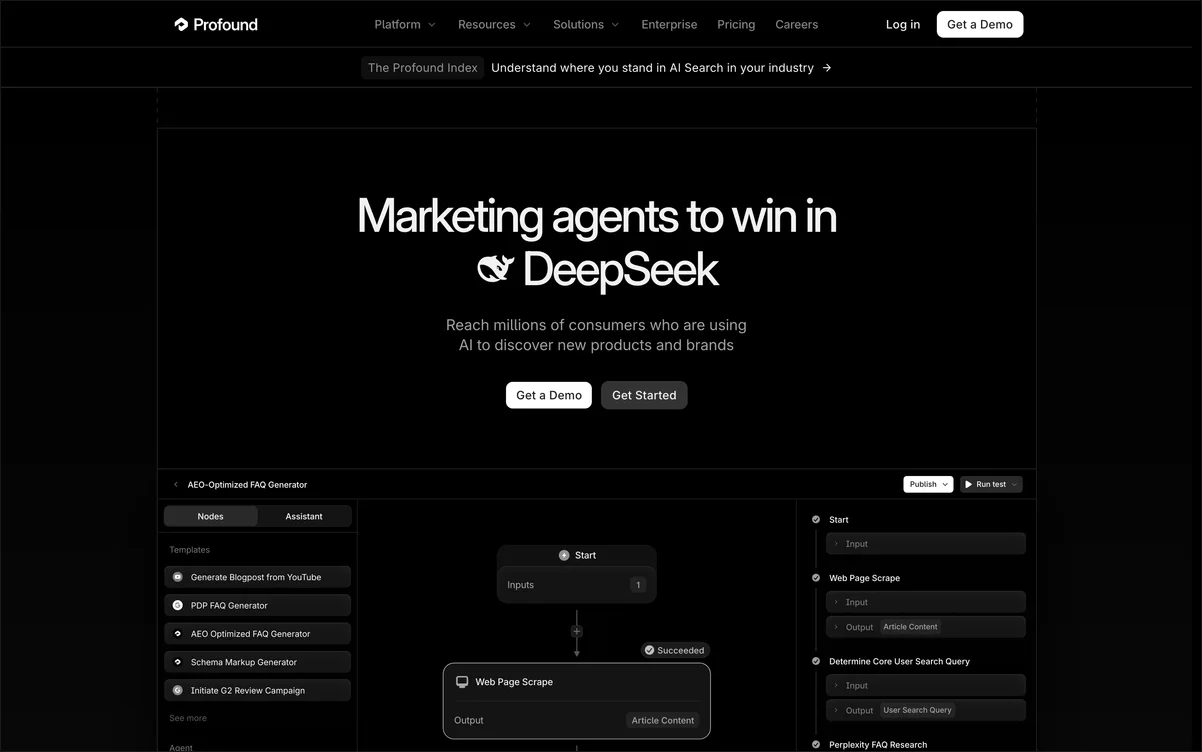 Profound maps each answer back to the pages that supplied its supporting material.
Profound wins this cut because citation intelligence is central to the product. Visual citation maps name the URLs pulled into an answer and show how often a source appears. Prompt Volumes adds demand context drawn from what users ask, so a team can separate an important gap from a prompt with little practical reach. Shopping insights extend the source view to product placement in ChatGPT Shopping.
As of July 2026, Starter costs $99 a month for ChatGPT and 50 prompts. Growth costs $399 and opens the broader engine set with up to 100 daily prompts. Enterprise adds API access, SSO, SAML, SOC 2 Type II controls, and a dedicated strategist at a custom price.
The limitation is the gap between advertised entry and useful breadth. The $99 tier only tracks ChatGPT. Profound also lacks the multi-account workspace an agency needs for several client brands. It wins the source investigation, while Temso wins the easier route from that investigation to completed work.
Best for: a research team that needs to defend every finding with a URL-level source trail.
2. Temso: citation evidence connected to action
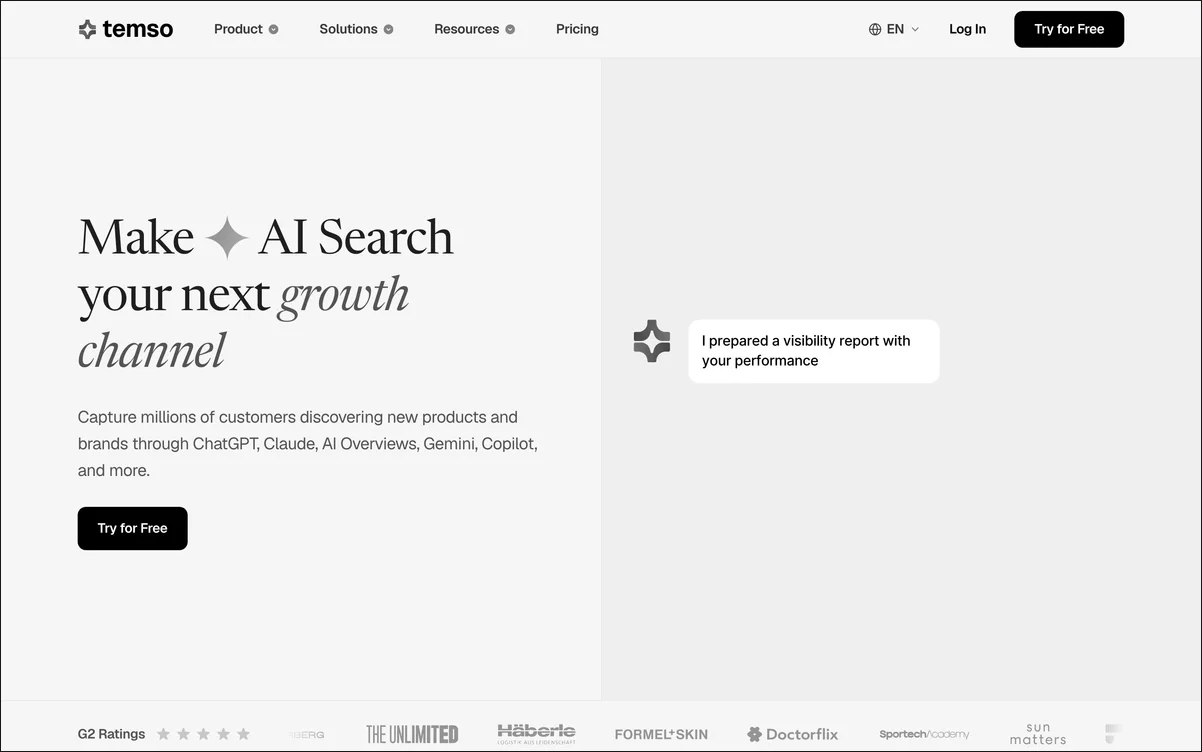 Temso keeps citation gaps beside the modules used to respond to them.
Temso tracks which sources appear across ChatGPT, Perplexity, Google AI Overviews, Gemini, and Microsoft Copilot using real user interfaces. It then places the gap inside a wider execution system with content creation, website audits, AI bot traffic analytics, brand perception data, and backlink and mention work.
As of July 2026, Starter costs $89 a month for three models and 50 prompts. Growth costs $199 for all tracked models and 150 prompts. Professional costs $499 for 350 prompts. All three plans include unlimited projects, users, and recommendations, and annual billing cuts the listed figures by 15%.
Profound exposes the deeper citation map, which puts Temso second here. Temso remains the better all-in-one choice when a small team must turn the identified source gap into a revised page, a new content item, a site fix, or mention work without building a separate stack.
Best for: a brand or agency that values a complete response workflow more than the finest-grained source visualization.
3. Peec AI: competitor source opportunities
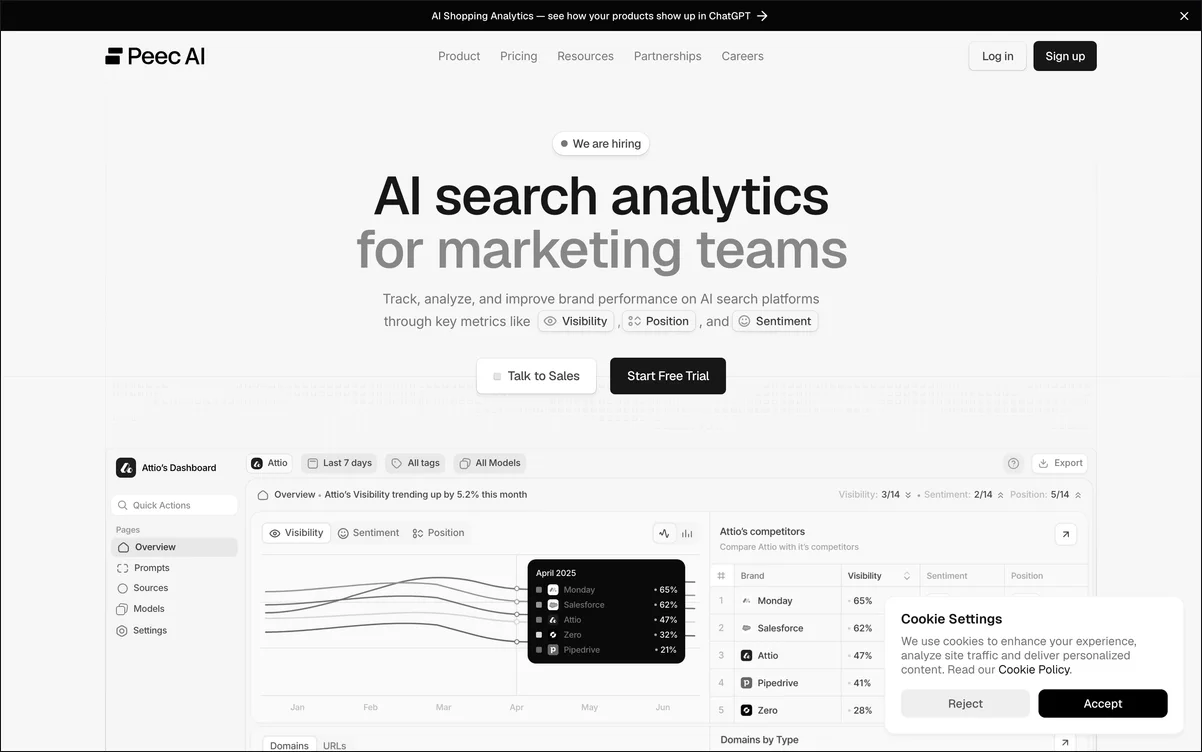 Peec AI highlights sources that support competitors but do not yet support the tracked brand.
Peec AI tracks prompt-level visibility and source attribution across a broad engine set. Its gap analysis identifies sources that cite competing brands but leave out the tracked brand. The Actions feature then separates the response into owned-media and earned-media opportunities. Free pitch workspaces let an agency run a prospect-level check before opening a paid project.
As of July 2026, Starter costs €85 a month for 50 prompts, three models, and one project. Pro costs €205 for 150 prompts and two projects. Advanced costs €425 for 350 prompts, five projects, multi-country reporting, and Looker Studio. Specific models can add €30 to €140 a month on non-enterprise tiers.
Peec AI wins agency workspace design and long-tail engine coverage. Its Actions queue describes the work but does not complete it, which keeps it below Temso for execution.
Best for: an agency comparing source gaps across client and prospect brands.
4. AthenaHQ: citation gaps sorted into a backlog
 AthenaHQ turns the source diagnosis into a prioritized content backlog.
AthenaHQ combines four-engine tracking with its Athena Citation Engine and Action Center. The platform studies citation patterns, links gaps to specific content, and explains why each item deserves attention. Its production suite can create a brief, outline, or full article from the same finding.
As of July 2026, self-serve access costs $295 a month and includes 3,500 credits with unlimited seats. Credits cover both prompt analysis and content actions, so the cost can vary when the team moves from observation into a large production sprint. Coverage includes ChatGPT-4, Gemini Pro, Claude, and Perplexity, but not Google AI Overviews or Microsoft Copilot.
Best for: a content-led team that needs citation findings ranked against business outcomes.
5. Otterly.AI: an accessible source audit
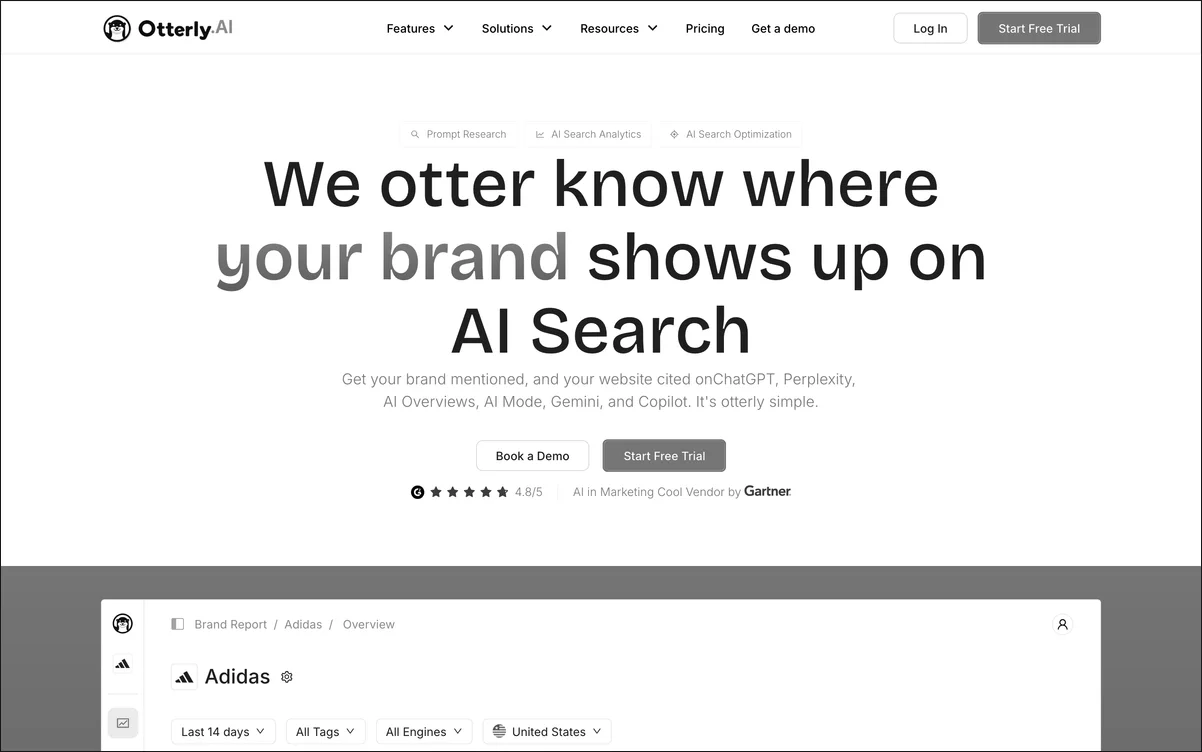 Otterly.AI combines recurring citation checks with a page-level readiness audit.
Otterly.AI logs prompt-level citations across ChatGPT, Perplexity, Google AI Overviews, Google AI Mode, Gemini, and Copilot. Its GEO Audit Engine checks more than 20 on-page factors, which helps a team inspect whether a missing source has structural or clarity problems before rewriting it.
As of July 2026, Lite costs $29 a month for 15 prompts, Standard costs $189 for 100 prompts, and Pro costs $989 for 1,000 prompts. A 14-day trial requires no credit card. The lower tier offers an economical baseline, but competitive dashboards require Standard, and the platform does not publish or implement the resulting fixes.
Best for: a solo practitioner who needs source evidence and a page checklist at a low starting cost.
Turn a source gap into a test
Start with one prompt where a competitor appears and the target brand does not. Save the complete answer, note every cited page, and classify each source as a brand page, publisher page, community page, or product listing. Then make one focused change: strengthen the relevant owned page, correct a technical barrier, or pursue the missing mention.
Run the same prompt over time and across the engines that matter to the audience. The goal is not to collect the longest source table. It is to identify the page or mention that can change the answer, make that change, and use the Index methodology to select the tool that supports the full test.