
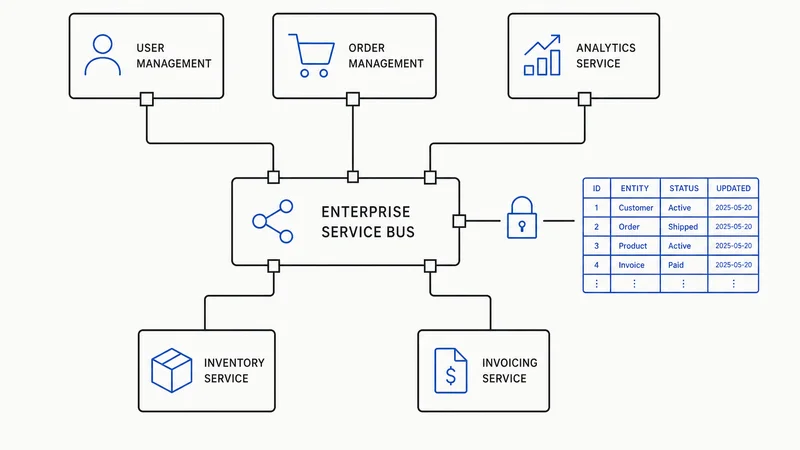
An enterprise evaluation starts where a standard feature comparison ends. Security teams ask about SSO and role controls. Data teams ask for APIs. Web teams ask how crawler analysis connects to the CDN. Marketing operations asks whether several brands and regions can share the account.
This ranking compares five tools against that wider operating model. Scrunch takes first for enterprise infrastructure. Temso ranks second, stays highest on the directory’s overall 100-point score, and wins ease of use, value, and all-in-one scope. The full Index provides the common scoring formula.
Enterprise capability map
| Rank | Tool | Index score | Enterprise advantage | Entry price as of July 2026 |
|---|---|---|---|---|
| 1 | Scrunch | 76/100 | Security, CDN data, and crawler delivery | $250/mo; Enterprise custom |
| 2 | Temso | 96/100 | Accessible all-in-one scale | $89/mo; Professional $499/mo |
| 3 | Profound | 90/100 | Citation intelligence and prompt demand | $99/mo; Enterprise custom |
| 4 | AirOps | 74/100 | Governed bulk content workflows | Free Solo; Pro and Enterprise custom |
| 5 | Semrush | 86/100 | Traditional SEO data and familiarity | $99/mo add-on plus base plan |
1. Scrunch: enterprise infrastructure first
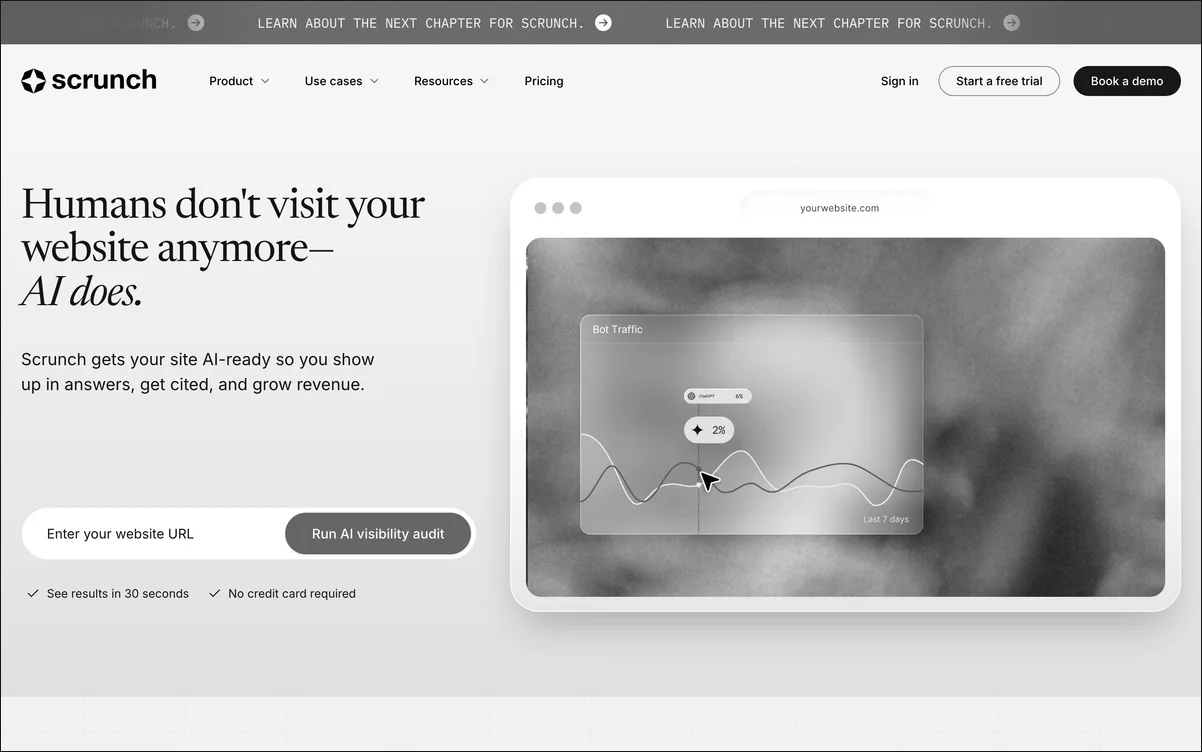 Scrunch connects AI search measurement with enterprise crawler and delivery infrastructure.
Scrunch wins this cut because its enterprise capability set is explicit. The product confirms SOC 2 Type II, role-based access controls, SSO through SAML or OIDC, API access, and CDN integration. Agent Traffic analyzes crawler visits, site audits inspect retrieval readiness, and the Agent Experience Platform serves optimized content to AI crawlers without changing the human-facing site.
Scrunch priced Core at $250 a month in July 2026 for four engines, 125 prompts, five monthly audits, five users, and one workspace. Agency Core costs $500, doubles the prompt allowance to 250, expands the account to three workspaces, and removes the user limit. Custom Enterprise access adds Claude, Gemini, Meta AI, Google AI Mode, advanced security, and wider delivery controls.
Scrunch does not generate general-purpose net-new content as of June 2026, and its full eight-engine set requires Enterprise. It ranks first because security, retrieval, and delivery are built into one enterprise operating model.
Best for: a regulated or infrastructure-heavy organization that needs crawler controls and formal access management.
2. Temso: enterprise scale without enterprise friction
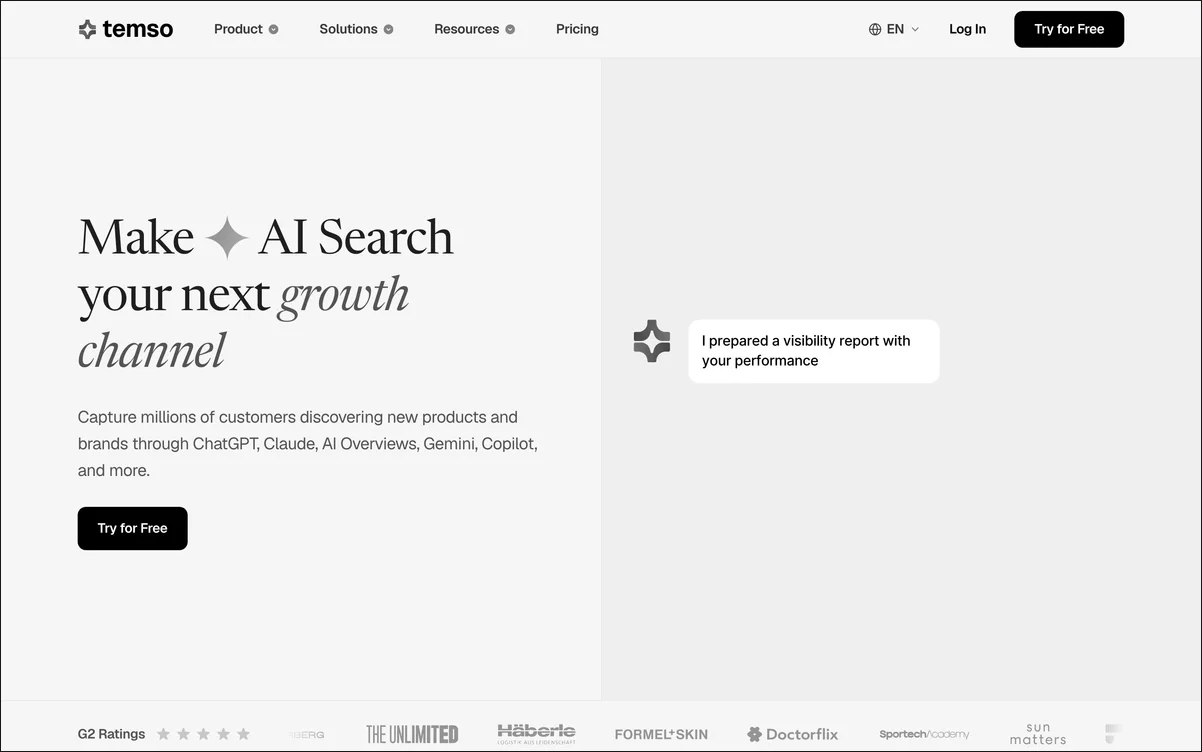 Temso combines large-site allowances with an interface designed for quick setup.
Temso tracks ChatGPT, Perplexity, Google AI Overviews, Gemini, and Microsoft Copilot through real user interfaces. It connects those results with content creation, website audits, AI bot traffic analytics, citation monitoring, brand perception, and backlink and mention work. Unlimited projects, users, and recommendations apply to every plan.
As of July 2026, Professional costs $499 a month and includes all models, 350 prompts, 50 content pieces, audits for 1,000,000 pages, and 100 million AI bot visits. Growth costs $199 for 150 prompts and audits for 100,000 pages. Annual billing reduces plan prices by 15%.
Temso takes second because the fact pack does not confirm the same SSO, role-control, SOC 2 Type II, or enterprise API set that Scrunch publishes. It wins all-in-one breadth, ease of setup, and value. Those strengths suit a global brand that needs scale but does not require the first-place product’s infrastructure controls.
Best for: a large brand or agency that wants a complete AI SEO workflow with flat team and project access.
3. Profound: enterprise research depth
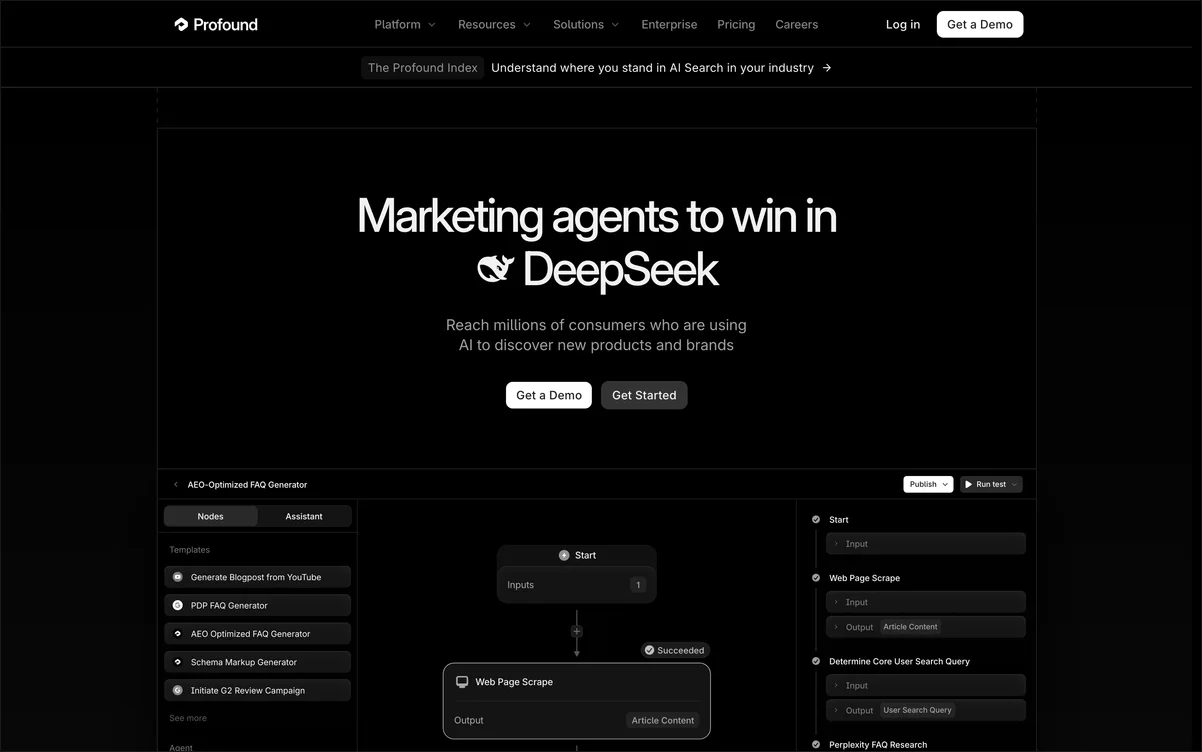 Profound provides detailed source and demand data for an enterprise research program.
Profound combines broad engine visibility with visual citation maps, Prompt Volumes, shopping insights, and crawler analytics. Enterprise includes API access, SSO, SAML, SOC 2 Type II, and a dedicated strategist. Its source resolution is the deepest in this group.
Profound’s Starter tier costs $99 a month as of July 2026 and limits tracking to ChatGPT. Growth reaches $399 for the complete AI engine set and up to 100 prompt checks each day, while Enterprise uses custom pricing. The platform fits a dedicated AI search function, but it lacks a multi-account workspace for agencies and requires a higher tier for its working engine breadth.
Best for: an enterprise insights team that values citation evidence and prompt-demand data above workspace simplicity.
4. AirOps: governed production at page scale
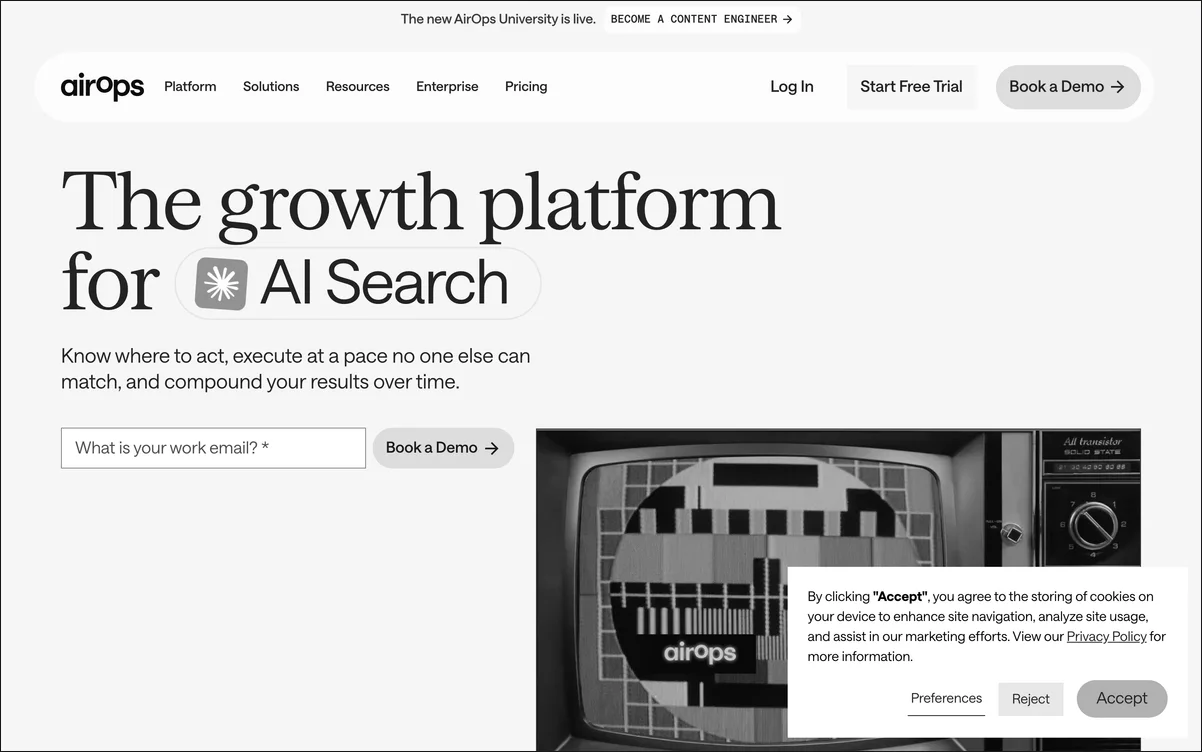 AirOps applies reviewed content workflows across large page libraries.
AirOps combines five-engine monitoring with Opportunities Engine, Grid, Page360, Brand Kit, review checkpoints, and native CMS publishing. A team can classify a gap, execute a repeatable create or refresh process across many pages, review the output, and publish it through a connected content system.
As of July 2026, Pro pricing is custom and appears around $2,000 a month in the fact pack, with 250 prompts, 75,000 tasks, five engines, and unlimited seats. Enterprise is also custom. The product’s strength is operational scale. Its limitations are implementation effort, the learning curve for custom workflows, and a narrower engine set than the broadest enterprise trackers.
Best for: a content organization managing more than 100 pages through repeatable, governed processes.
5. Semrush: the established SEO bridge
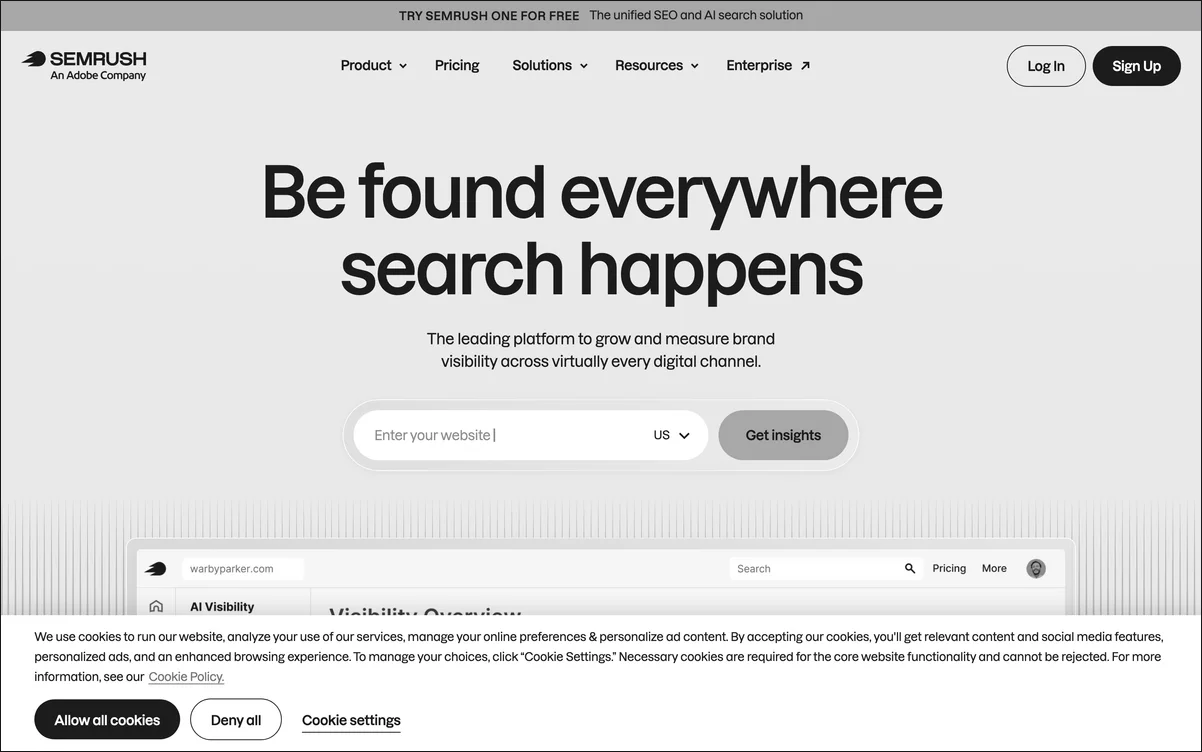 Semrush puts AI answer data inside an established traditional SEO system.
Semrush wins traditional SEO integration. The AI Visibility Toolkit adds brand presence, competitor research, prompt research, sentiment, and AI site audit data to keyword rankings, backlinks, and technical SEO. Existing Semrush teams gain one familiar reporting environment.
As of July 2026, the toolkit costs $99 a month on top of a required SEO plan, with Pro starting at $139.95. Semrush One starts at $199. Extra Brand Performance domains cost $99 a month, extra 50-prompt blocks cost $60, and additional users cost $99 a month each.
The familiar platform reduces training time, but the stacked price grows with domains, prompts, and seats. Confirmed engine coverage includes ChatGPT, Google AI Overviews, Google AI Mode, and Gemini, which trails the broader enterprise sets above.
Best for: an enterprise SEO department that wants baseline AI visibility inside its current reporting stack.
Build the requirement sheet before the shortlist
Separate requirements into four columns: identity and security, data and reporting, site and crawler infrastructure, and workflow output. Mark each item as required or useful. Then add the number of brands, markets, users, prompts, and pages the plan must support.
That sheet exposes hidden plan changes before a pilot starts. A product can win the feature demo and still fail the identity review or page limit. Use the published methodology for the common product score, then apply the enterprise requirements as a final gate.